


A robotics curriculum for schools works when hardware, coding skills, and teacher support scale together by grade, not when a school buys whatever kit is newest. Cyber Square builds that kind of curriculum for schools to run themselves, with the hardware, grade-wise coding progression, and teacher training bundled together instead of left for each school to piece together on its own.
Why Does "Best" Even Need Defining?
Because every robotics curriculum for schools gets called "the best" by whoever is selling it. That word has been drained of meaning.
Strip the marketing away and only three questions matter: does the hardware match the student's age, does this year build on last year, and can anyone actually prove the student understood it. A program that can't answer those isn't a curriculum. It's just a box being sold to a school.
How Do the Three Robotics Approaches Actually Compare?
Most schools looking for a robotics curriculum for schools only compare sticker prices on hardware, and never look at what happens after the kit arrives. There are really three paths on the table, and each one comes with different trade-offs.
| Approach | Classroom Setup | Teacher Burden | Cost Reality | Curriculum Continuity |
|---|---|---|---|---|
| Closed hardware kits (branded, proprietary robot kits) | High. Needs dedicated storage, parts sorting, and a fixed lab layout. | High. Teachers have to learn a closed, proprietary system from scratch. | Expensive per seat, plus recurring cost every time a part is lost or broken. | Usually limited to one grade or one term, not a K-12 path. |
| Raw open-source electronics (bare Arduino boards, breadboards) | Medium. Needs a standard lab with a safe wiring setup. | Very high. Someone with an electronics background usually needs to be available to help. | Cheap per component, expensive in the hidden hours spent troubleshooting. | Fragmented. No standard textbook or grade-by-grade framework to follow. |
| Integrated curriculum platform (our approach at Cyber Square) | Low. Runs on the devices a school already has. | Low. Comes with lesson plans and presentations ready to use, plus live teacher training sessions. | Students move to new hardware as they grow, the same as with any approach. What stays constant is the curriculum itself: one framework spanning KG through Grade 12, not a separate purchase at each stage. | High. A single grade-wise progression from Micro:bit through Arduino to Raspberry Pi. |
Any of these three can work, depending on the school. But most comparisons stop at the price tag and skip the teacher-burden and continuity columns, and those two are usually what decide whether a program is still running in year three.
What Should a Robotics Curriculum for Schools Look Like, Grade by Grade?
A strong robotics curriculum for schools scales its hardware and complexity as students grow, rather than repeating the same beginner kit every year.
| Grade Band | Typical Hardware | Core Skill Being Built |
|---|---|---|
| Grades 2 to 4 | Micro:bit, block-based coding | Cause and effect, basic logic |
| Grade 5 onward | Arduino with sensors and actuators | Circuits, sensor input, sequencing |
| Grade 9 and above | Raspberry Pi | Full-stack robotics, IoT, real programming |
This is the progression we follow at Cyber Square, and it is a deliberate one. A ten-year-old and a sixteen-year-old should not be handed the same box.
Where Do Most School Robotics Programs Break Down?
Most robotics programs fail because they happen once and then disappear, instead of running like a real subject taught all year. A single "robotics day" with a borrowed kit teaches almost nothing that lasts.
A 2024 meta-analysis in the International Journal of STEM Education, covering 21 studies and more than 2,400 students, found educational robotics produced a moderate positive effect on both learning performance and attitudes toward STEM. It found no significant effect on computational thinking specifically.
What the study's moderator analysis did find significant was discipline: robotics tied directly to a technology-focused subject outperformed robotics added on as an extra to science or math classes. How long a program ran, by contrast, made no statistically significant difference in that dataset.
Beyond what that particular study measured, here is where robotics programs actually break down in real classrooms:
- No continuity. Students touch a robot once a term and forget everything by the next session. This is about frequency of exposure, not the total length of a single intervention.
- No coding foundation. Robots without underlying logic are just remote-controlled toys.
- No evaluation. Teachers hand out kits but have no way to know if a student understood the wiring or just got lucky.
- No teacher support. Hand a teacher a robotics kit with no training and no lesson plan, and most will either struggle through it poorly or quietly skip the unit altogether.
What Should a Purchase Checklist for Robotics Curricula Include?
A school should choose a robotics curriculum for schools the same way it chooses a maths textbook: by checking whether it is structured, supported, and backed by proof that students actually learn from it.
Ask these before signing anything:
- Does the curriculum map to a specific grade and a specific outcome?
- Is the hardware age-appropriate, or the same kit sold to every class?
- Are teachers trained and supported, or handed a manual and left alone?
- Is there a way to evaluate submissions without relying on teacher memory?
- Does the program lead somewhere: a showcase, a competition, a real project?
If the answer to more than one of these is "no," keep looking.
What Kind of Projects Should Students Build to Prove the Curriculum Works?
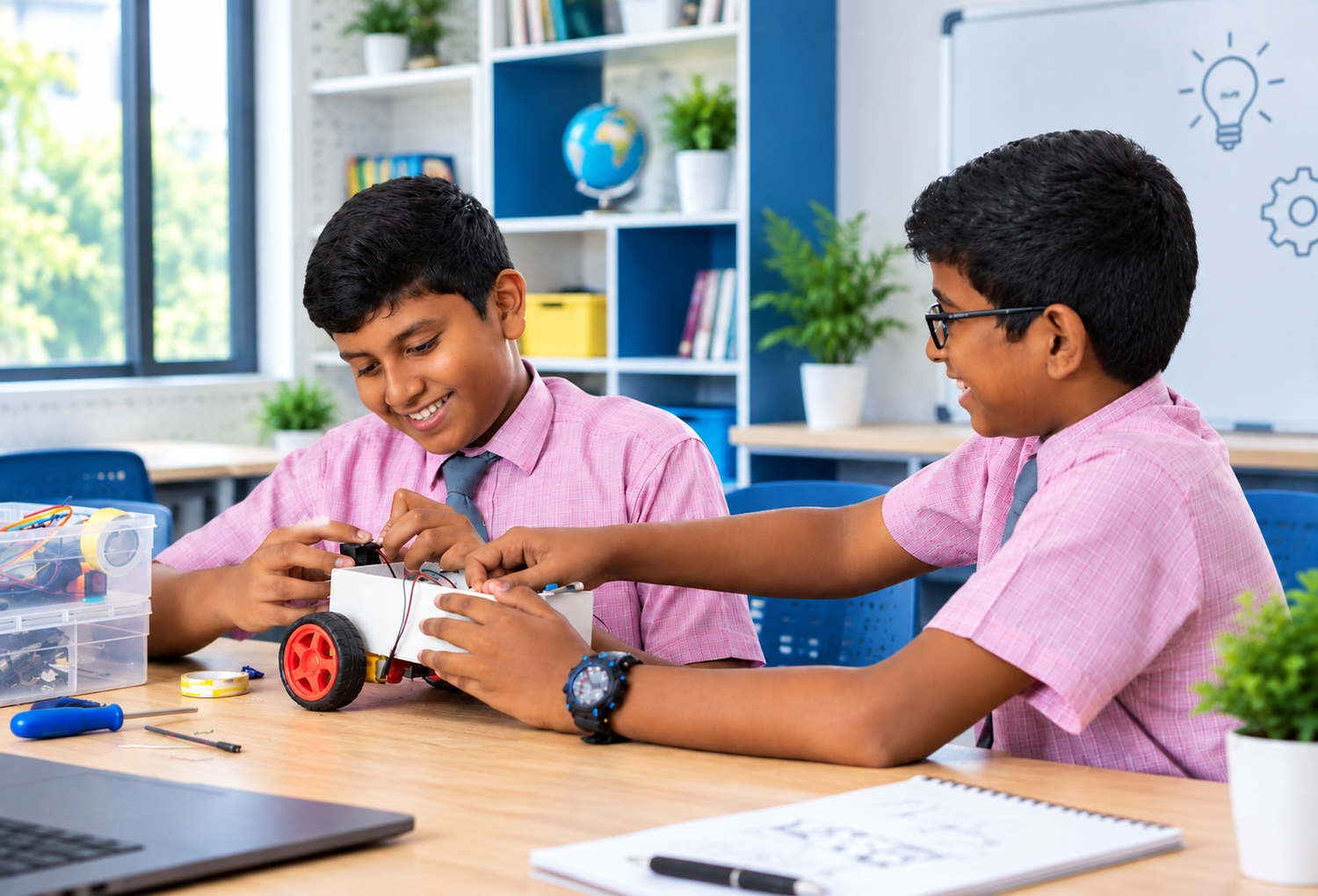
Real projects, not simulations of real projects. By the end of a good robotics curriculum for schools, a student should have built something that actually works, not something for a display shelf: a line-following robot, an obstacle-avoiding robot, a Bluetooth-controlled car, a parking-assist system, or an automatic irrigation setup.
Senior students can push further into home automation using IoT and Micro:bit-based systems. The point isn't the robot. The point is that a student solved a problem with their hands and their code.
Why Does Cyber Square Stand Out From Other Robotics Programs?
Because we built our robotics curriculum for schools around the idea that a robot is a teaching tool, not a toy, and we back the operational side of that with real outside checks. Our platform is AICPA SOC and ISO 9001 certified, and in 2022, Cyber Square served as the technology partner for Habitat Schools' Guinness World Records achievement for the Most Users in a Web Development Video Hangout, with 2,803 participants.
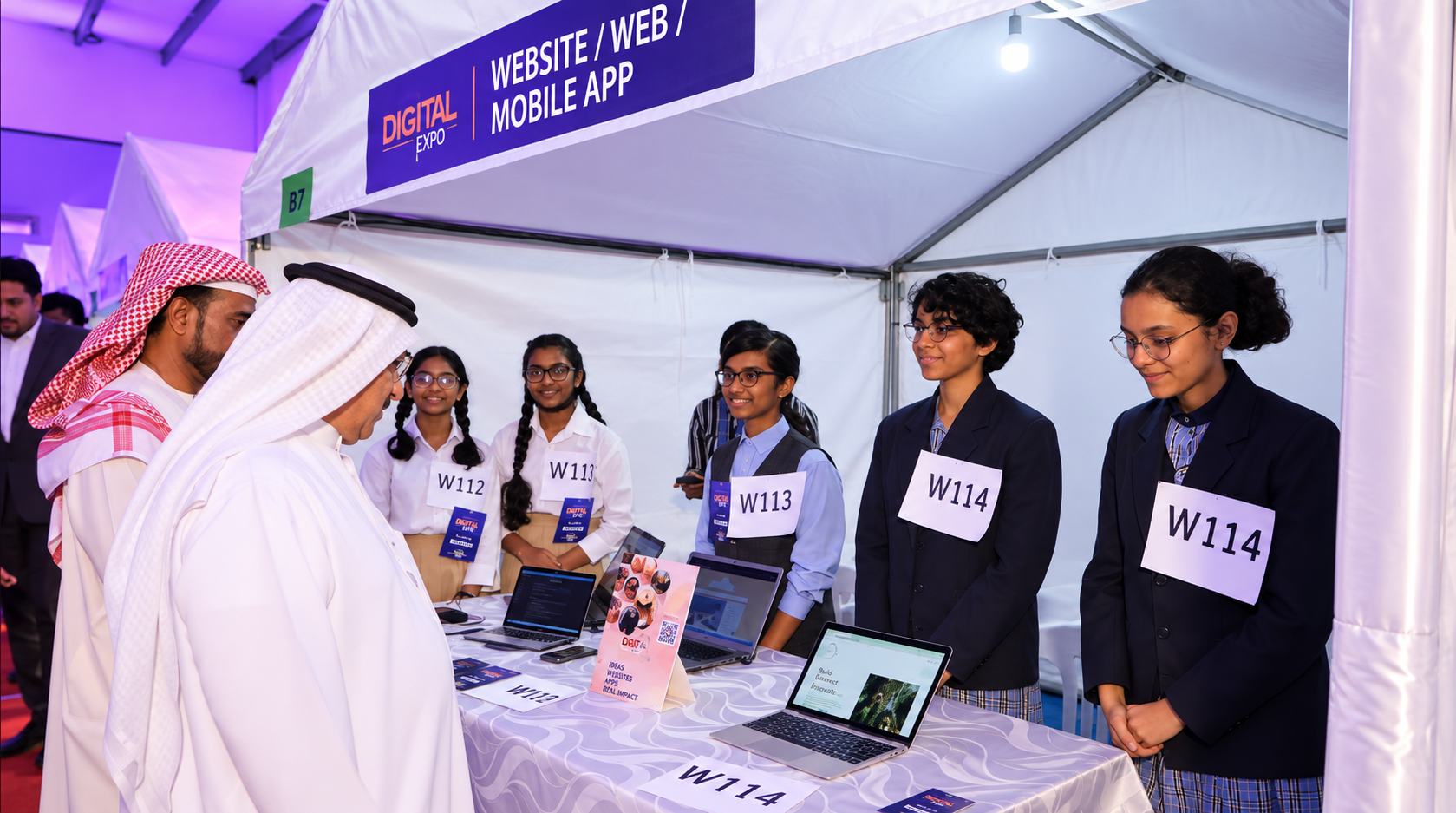
Our approach rests on four connected stages: conceptual learning through textbooks, practical learning through project kits, experiential learning through labs and clubs, and expression through showcases like Digital Fest. Robotics doesn't sit alone in a corner.
Is Investing in a Robotics Curriculum for Schools Worth It in 2026?
Yes, provided the curriculum is chosen for structure and not spectacle. A school that invests in a properly sequenced, well-supported robotics curriculum for schools gives its students something a one-off workshop never can: the ability to build, debug, and explain their own work by the time they leave school.
That is the actual return on investment. Not the robot. The thinking behind it.
Bring This Into Your School
A kit is cheap. A curriculum that builds on itself, year after year, is what's actually worth paying for. Bring Cyber Square's structured, grade-wise robotics curriculum into your school.